
 |
| Black Woodpekcer Dryocopus martius (slo. črna žolna) - male of the second pair that we are tracking down in the Letea forest. On this occasion male and female were feeding together on the ground on rotten tree stumps. Maybe this pair will nest in an old hole. Meanwhile the first pair in the northern part of the reserve is actively excavating the nest hole... |
 |
| Black Woodpekcer Dryocopus martius (slo. črna žolna) - female finishing to excavate the nest-hole featured in the previous post (VIDEO - edited with new footage; watch HD). |

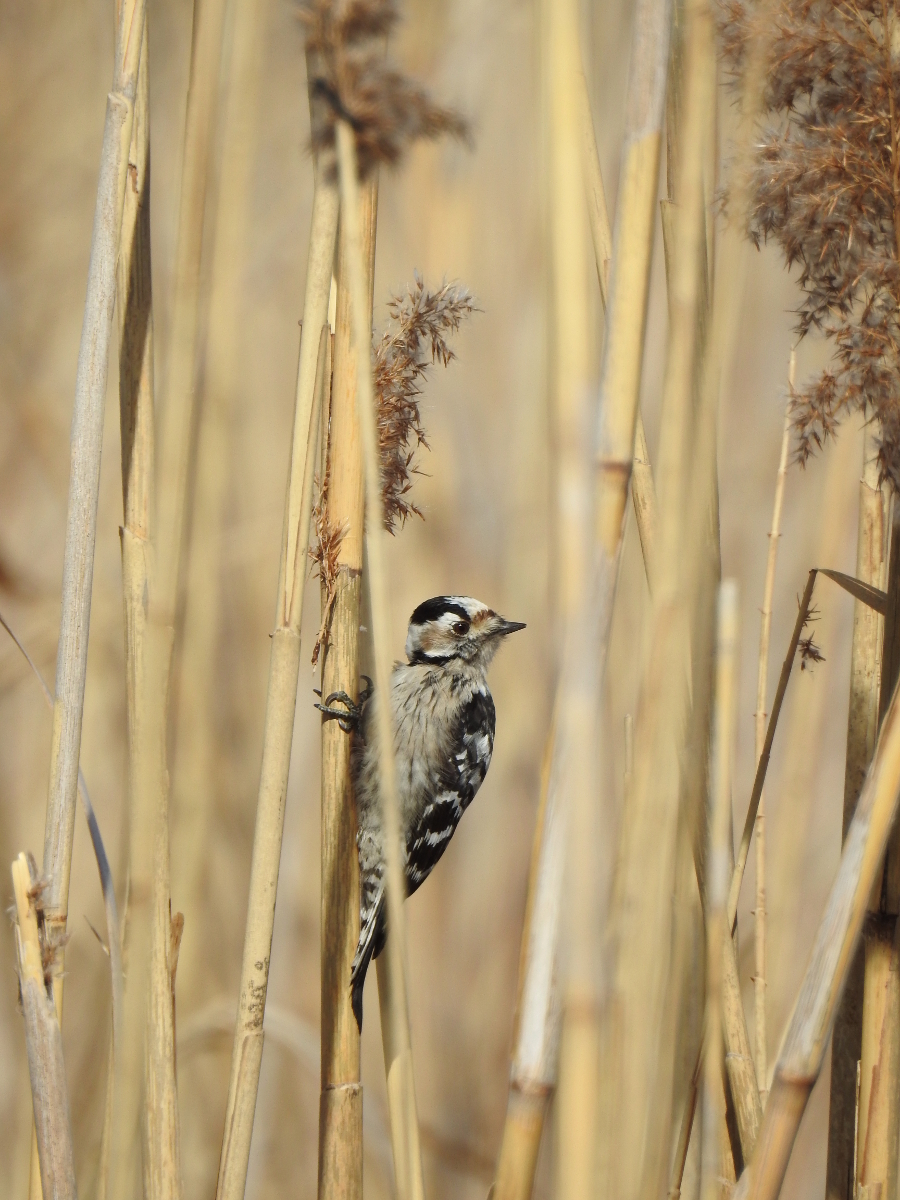 |
| Lesser Spotted Woodpecker Dendrocopos minor (slo. mali detel) - very vocal and territorial at the moment, with at least 2 pairs in the northern part of the reserve and an additional 3-4 in the Letea forest. We are so focused on woodpeckers that we manage to find them also in unusual places. The above female was observed feeding on reeds Phragmites australis. This behaviour can occur in winter when the food resources are poor. In such occasions the woodpecker forages on dormant spiders and other insects in the reeds. A fascinating behaviour that we haven't witnessed before. |
 |
| Grey-headed Woodpecker Picus canus (slo. pivka) - female. It's quite difficult to track down breeding pairs as the species is very numerous and territories are not well defined yet. |

 |
| Dalmatian Pelicans Pelecanus crispus (slo. kodrasti pelikan) finally also resting on a raft in one of the reserve's lagoons. In the past days we regularly spotted them in the sky, but yesterday they also landed on the raft: in the morning (above) and in the evening (below). In the photos also: Cormorants Phalacrocorax carbo (slo. kormoran), Caspian Gulls Larus cachinnans (slo. črnomorski galeb) and Great Crested Grebes Podiceps cristatus (slo. čopasti ponirek) swimming in the back. |

 |
| Red-crested Pochard Netta rufina (slo. tatarska žvižgavka) - numbers of this scarce duck species are building up these days. Flocks of up to 10 birds are seen on large, reedbed-fringed lakes at the reserve, where they also breed in small numbers. |
 |
| Smew Mergellus albellus (slo. mali žagar) - despite some new spring arrivals, some winter birds are still around. It's always a plesure to see Smews even if they remember us winter time. |
 |
| Ferruginous Ducks Aythya nyroca (slo. kostanjevka) hiding among Coots Fulica atra (slo. liska). Ferruginous Duck is another sought-after breeding species that is arriving at the reserve in the last days. |
 |
| An adult Dalmatian Pelican Pelecanus crispus (slo. kodrasti pelikan) spotted from the kitchen's window while we were having breakfast! |
 |
| Golden Jackal Canis aureus (slo. zlati šakal) photographed during a session in one of the reserve's photo-hides. |
 |
| Bullfinch Pyrrhula pyrrhula (slo. kalin) - male. Common in wooded areas in the northern part of the reserve. |
 |
| Treecreeper Certhia familiaris (slo. dolgoprsti plezalček) collecting nest material (spider webs). |
 |
| Stock Doves Columba oenas (slo. duplar) are quite shy and difficult to approach. |
 |
| Pallas's Gull Larus ichthyaetus (slo. ribji galeb) is seen on a daily basis in small numbers, flying above the reserve to and from the Danube. |
 |
| White-tailed Eagle Haliaeetus albicilla (slo. belorepec) - one of the two adults patrolling the edges of Letea forest. |
 |
| Golden Eagle Aquila chrysaetos (slo. planinski orel) - left & White-tailed Eagle Haliaeetus albicilla (slo. belorepec) - right. On a calm sunny day we spotted an amazing thermal of 8 juvenile White-tailed Eagles and a juvenile Golden Eagle over the sandy dunes of the Letea forest. |
 |
| Polygonia c-album was the first butterfly of the season and a flash of colour in the rather grey landscape. |
 |
| Fire-bellied Toad Bombina bombina (slo. nižinski urh). The first warm and sunny days in the Delta were enough to wake up the amphibians from the hibernation period. |
 |
| Marsh Frog Pelophylax ridibundus (slo. debeloglavka). |
 |
| Semi-feral (or semi-wild?) pigs at the reserve's edge. |
 |
| The glow of gold in nearby Ukraine. |
 |
| The picturesque village of Letea. |
 |
| From Letea to Rosetti with the Disney-styled church in the back. |
 |
| Traffic jam in Periprava village! |
 |
| Exploring the nearby villages - Periprava. This colourful house with a brethable, reed-covered roof and new windows is on sale. Anyone interested? |
 |
| Bark-stripping in search of food (a woodpecker technique!). |
 |
| Semi-wild Letea horses. |
 |
| A sunny day in the steppe. |
 |
| Enjoying the sunset... with a crow. |


